Malambo Grassroots 2025 Newsletter
On behalf of all of us at Malambo Grassroots, thank you for your support in 2025! It's been a full and exciting year for us—please read on for some highlights.
In these uncertain times, being small turned out to be our Super Power. The dissolution of USAID in February caused ripple effects across the international not-for-profit community. The people these organizations help, who are most often from vulnerable communities, will feel the impact heavily. As well, the cost of living in Zambia, as in the rest of the world, has continued to rise.
But despite instability on the global stage, Malambo Grassroots has been able to continue our work. This is because most of our donors are individuals, like you, rather than large foundations or governments. When we say "we couldn't do this without you," we really mean it!
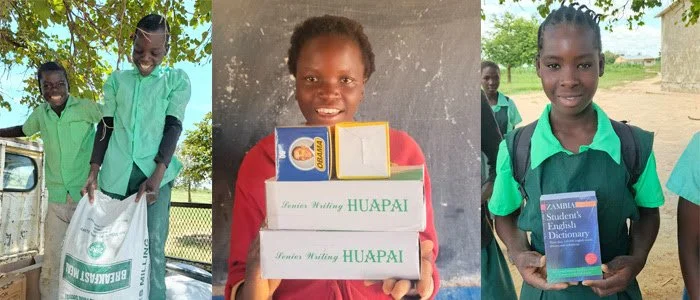
A delivery of food and school supplies brings smiles to the faces of these school children.
Growing Stronger: Expanding the Impact of Tree Planting
Thanks to the Jan's Trees fundraising campaign, we've been able to deepen and expand our tree-planting program beyond simply planting seedlings, towards true community resiliency.
In February and March, Rabson Kambwali, our in-country facilitator and Dallas Lwiindi, an agroecology expert, visited over 30 sites that have received seedlings. They recorded success rates, challenges, and offered guidance. We gained a lot of useful information from this process, including identifying the most common challenges and gathering ideas for achievable solutions. Periodic education in tree care continues to be key to ensuring success.
This research underscored our suspicion that hungry goats and cows are one of the major threats to young tree seedlings. To address this, we chose two test sites that had both good access to water and a committed community. Dallas oversaw the construction of a fenced in area, proper land preparation, and the planting of 400 new seedlings per site.
In 2026, we would like to provide more monitoring and build fencing in one or two more communities. As well, we're researching alternative ways that people in rural communities can generate income so that they don't need to depend on selling firewood and charcoal. Charcoaling is often the only source of income for rural families, but it contributes to deforestation, air pollution, health problems (such as lung illnesses), and an increased risk of house fires.
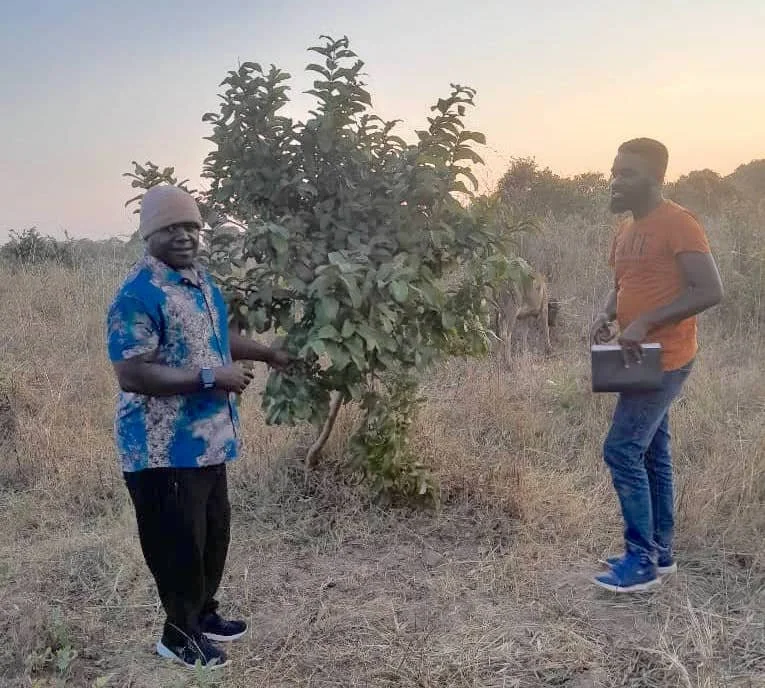
Rabson Kambwali, our in-country facilitator and Dallas Lwiindi, a local agroecology expert, inspect trees that were donated by Malambo Grassroots.
$210 CDN covers the cost of one day of tree monitoring + guidance (2–3 sites per day, depending on distances)
$2,000 CDN buys all building materials for a 50 x 50 m fence, including gate
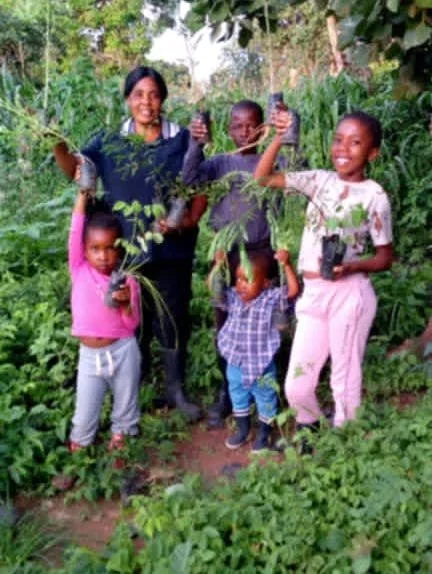
We were surprised to receive 1000 donated tree seedlings from this family! We are so grateful for their generosity and faith in our tree-planting program.
Unlocking Potential, Or Why Education Matters for Africa's Growth
Another way that we're strengthening the tree-planting program is to offer education in related fields. We're excited to sponsor Paul Mukonde, who's completing his first year of a three-year Diploma in Agroecology at Kasisi Agriculture Training Centre. This program is primarily online, with a couple of weeks per semester on campus. Paul lives in a remote village with no access to electricity and spotty cell reception, so as you can imagine, he has faced challenges. Like any college student these days, Paul needed a cell phone and laptop for his studies.
We've just heard that the school selected Paul to remain on campus as a work-study / practicum student. The school will pay for his tuition and accommodation, and we will support him with food costs. We're very happy for Paul, as the practical experience will solidify his book learning. Though ironically, buying food will cost us more than his tuition did!
We're in the midst of interviewing potential students for the same agroecology course.
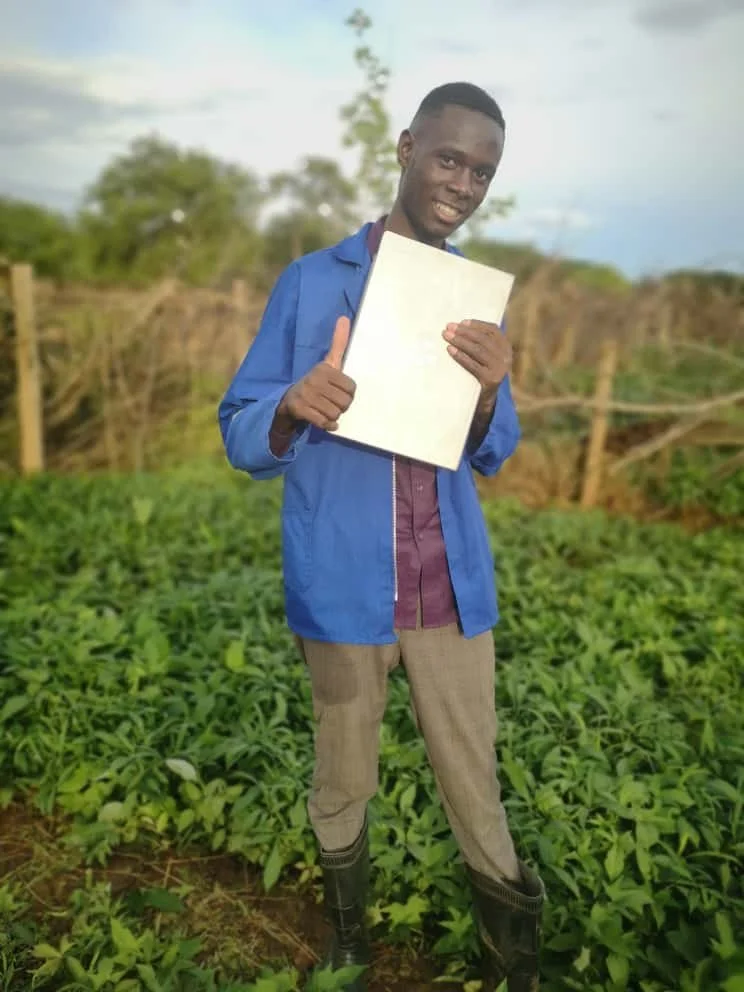
"Somehow I would want to use my education for my own farming and educating many more on organic farming." — scholarship recipient, Paul Mukonde, 1st year Agroecology poses with his laptop.
In December last year, we heard from Chabota Malambo, a student that we had sponsored through St. Vincent de Paul school in Monze. Chabota is studying Information and Communication Technology at Chalimbana University near Lusaka. Chabota had managed to pay tuition for the first semester, but needed help with the cost of accommodation. In September he started the second year of his four-year program. We look forward to supporting this enterprising young man. Digital literacy is in demand in Zambia.
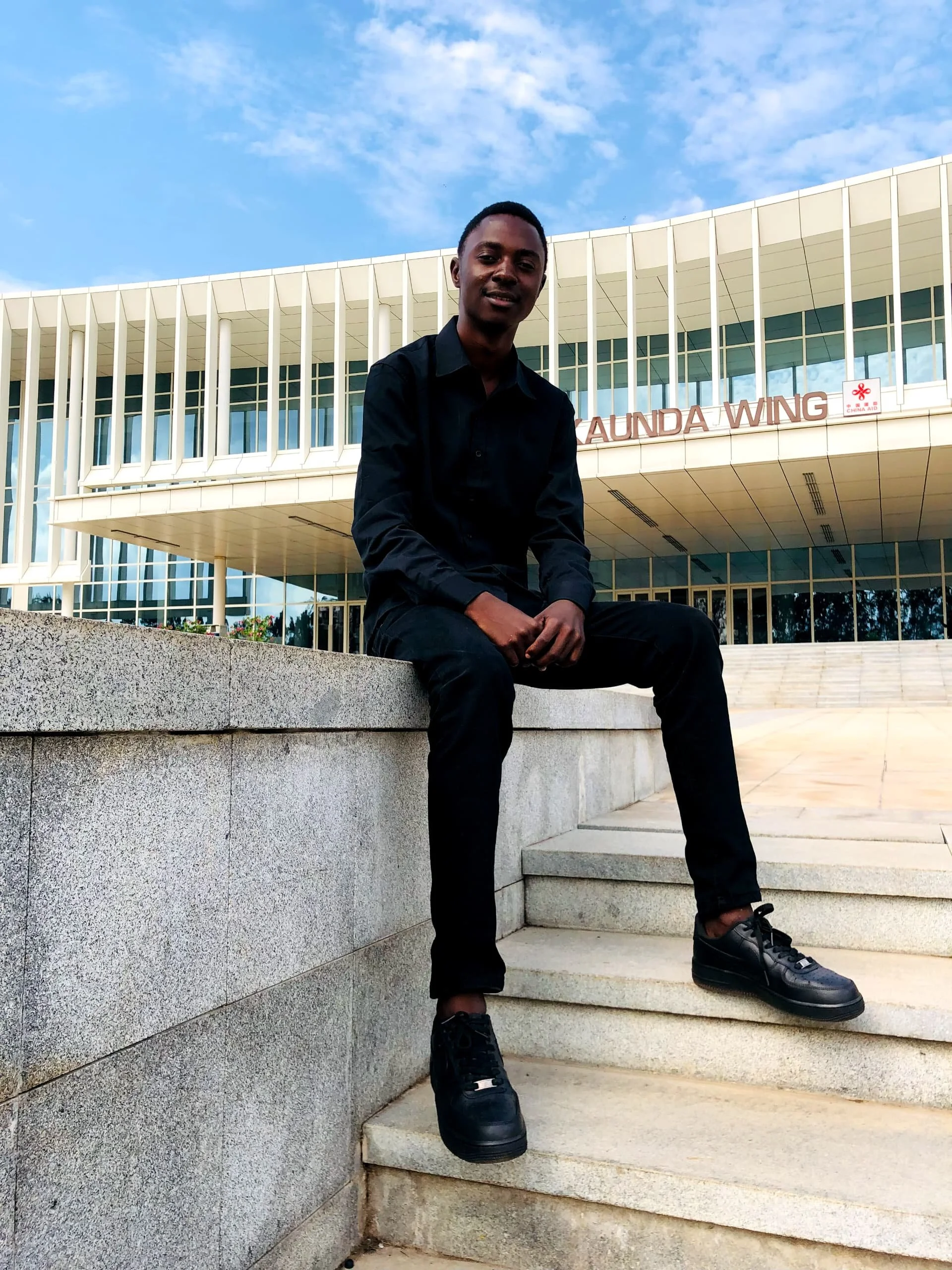
"I will never forget how you helped me with my accommodation money at Chalimbana University during for the whole academic year. Your support was a true blessing and made it possible for me to continue my studies without that heavy burden. I honestly don't know what I would have done without your help. ...
Your past kindness has truly inspired me, and I hope one day to be in a position to help others the way you have helped me." — scholarship recipient, Chabota Malambo, 2nd year, Bachelor of Information Technology With Education
$1100 CDN pays for Chabota's tuition and accommodation for one year
$150 CDN covers Paul's food costs for one month
$275 CDN covers tuition for one semester at Kasisi Agriculture Training Centre (2 semesters per year. The diploma program is 3 years)
$425 CDN buys one refurbished laptop
$475 CDN buys a new cell phone
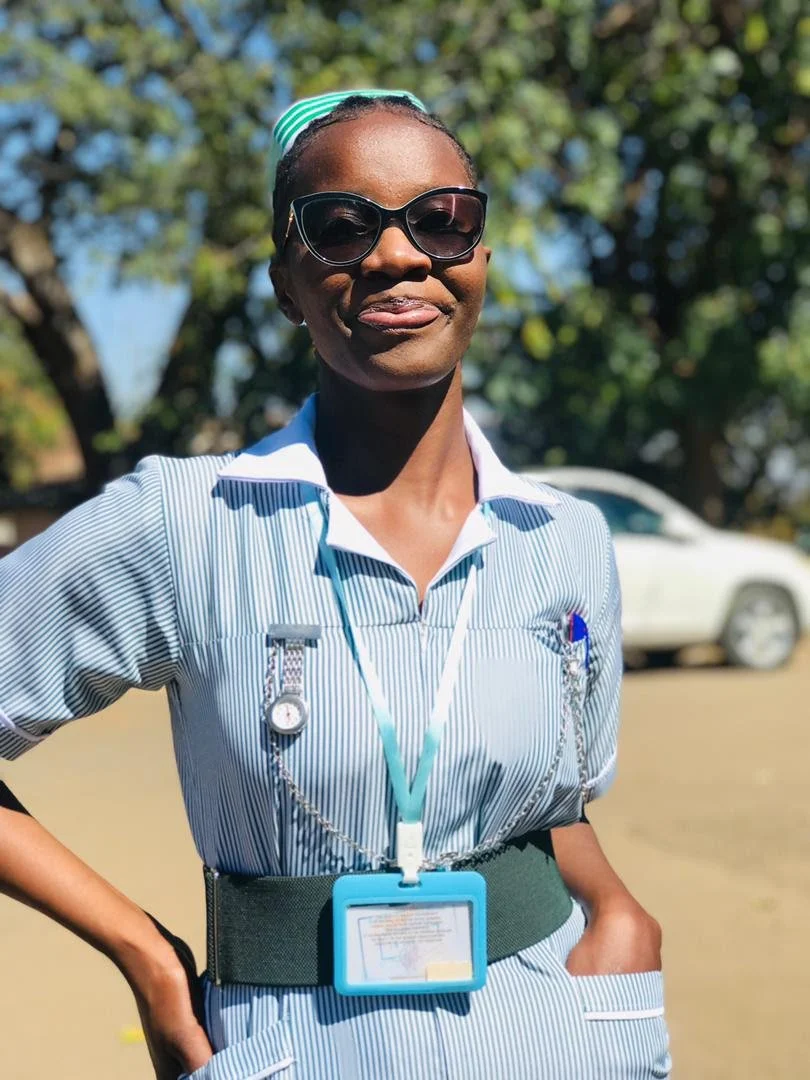
We are proud of Gracious Muleya, who will finish her nursing degree in 2026. In addition to her studies, Gracious has been busy with practicum placements in several hospitals in the area. She has gained experience in gynaecology, orthopedics, psychiatry, ophthalmology, and ear, throat, and nose medicine, and in surgery prep. A few generous donors stepped up to help this young women through her final two years of studies. We wish Gracious all the best in these final months of her program.
Growing Green
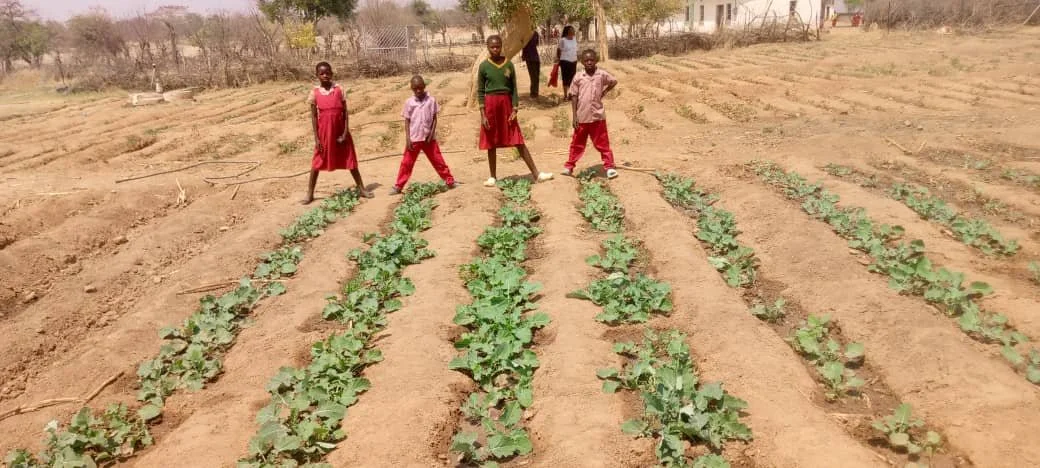
Several schools that we've been working with have asked for further education around gardening, caring for their tree seedlings, and climate change. Each school maintains a large garden, which serves multiple purposes: produce sales generate income for school expenses; work in the garden provides hands-on learning environment for the Agriculture and Gardening curriculum; the food sustains underpaid teachers; and occasionally the harvest feeds the students.
Thanks to a generous grant from Rose Charities, in 2025, we offered a series of garden-training workshops to students from two local schools. Students (and teachers) learned about composting, preparing garden beds, ways to save and retain water, and other principles of sustainable farming. The students learned some theory and got some hands-on experience in the fields.
The teachers reported that the students were keen to learn and gained a sense of ownership for the garden. They also gained skills in "smart gardening" and climate change adaptation measures.
Most students in these schools are likely to become small-scale farmers, so gaining these skills will make them more resilient in the future. These communities and schools face a lot of challenges: poverty, drought, lack of infrastructure, lack of school funding. Overcoming these challenges requires a long-term program. We're looking for ways these schools can do this.
These workshops were just a start! We're looking for ways the schools can expand and maintain a garden education program long term.
Exciting Developments at St. Vincent de Paul Community School
St. Vincent de Paul school in Monze completed the conversion of a classroom into a science lab, a multi-year project. The students were excited to start using the lab right away, even though there were no chairs yet. In 2026, we will help the school with lab supplies like test tubes, petri dishes, and text books. We are looking for other ways to strengthen the school's STEM (Science, technology, engineering, and mathematics) programs, to better equip their students for the future.
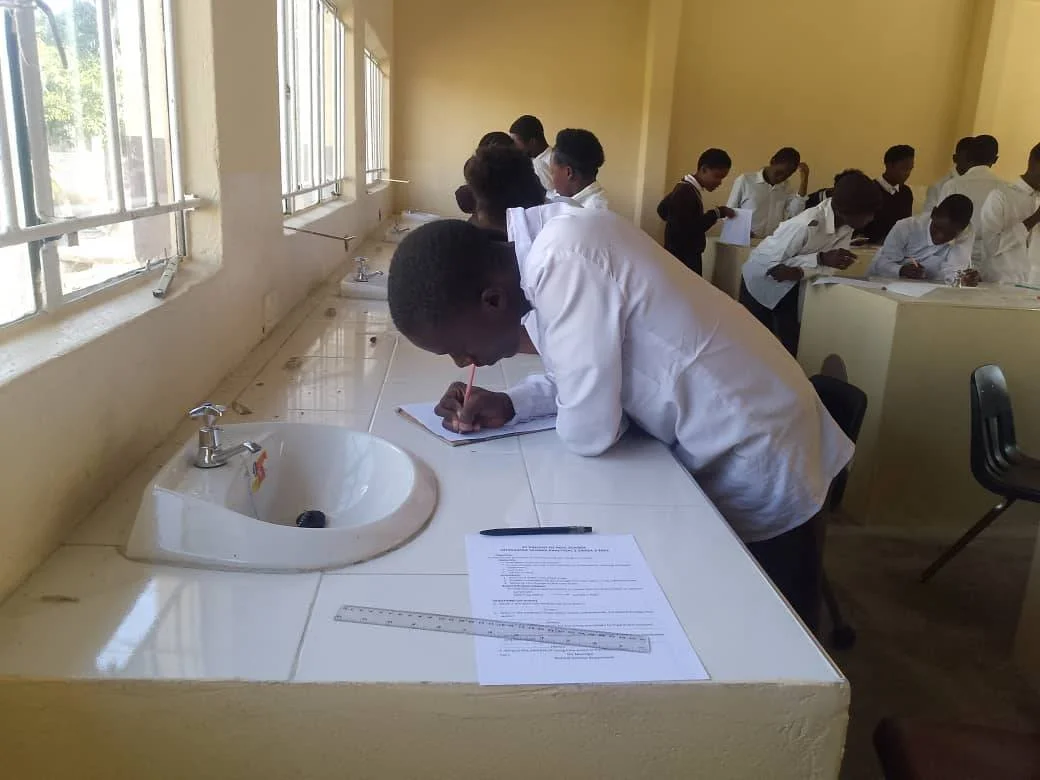
We also covered the tuition for 60 of their most vulnerable students from preschool to Grade 9, plus a hot-lunch program for the whole school (420 students) throughout the year.
Finally, we've been very happy to provide toiletries, sanitary supplies, and food to 20 teen girls. I asked Sr. Lontia why these older girls need food when the school already offers a hot-lunch program. She explained that teenaged girls are responsible for providing food for their families. By offering them some basic groceries, the girls will not be forced to beg and so will be less vulnerable to pregnancy or abuse.
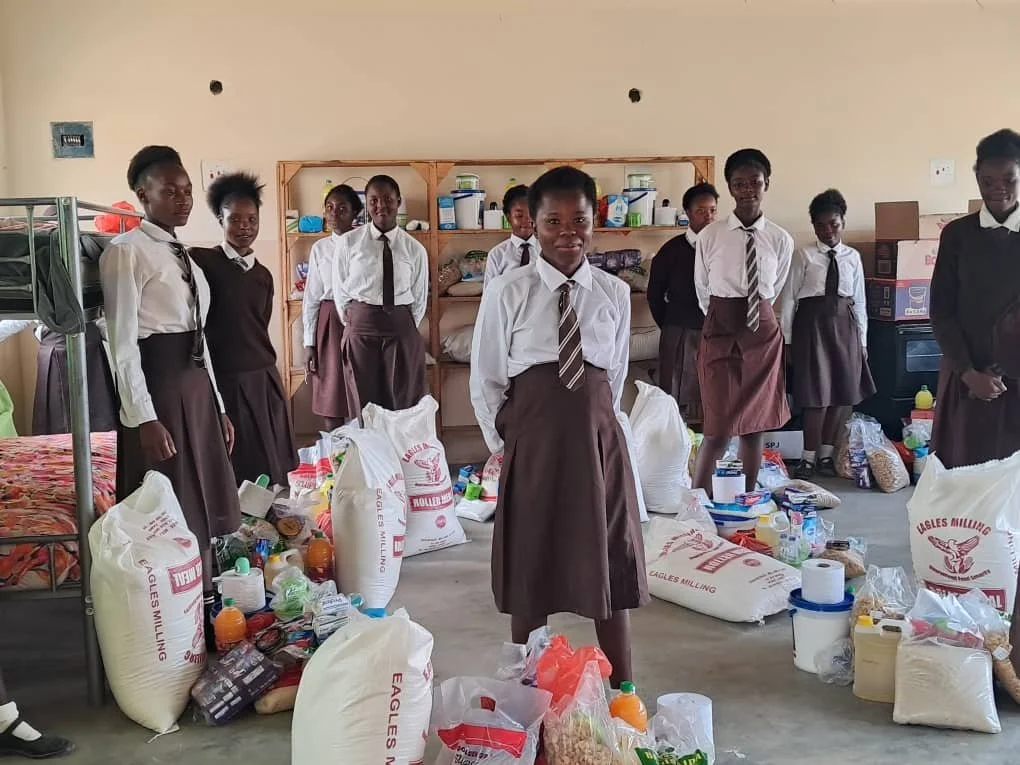
These grade 8 and 9 girls receive toiletries like soap, toothpaste, toilet paper, and sanitary supplies, as well as basic groceries—mealie meal (corn meal) salt, beans, and cooking oil.
$50 CDN covers tuition for 1 student (PreK-Grade 7) for a year
$125 CDN buys a year's supply of toiletries and food for 1 Grade 8 or 9 girl
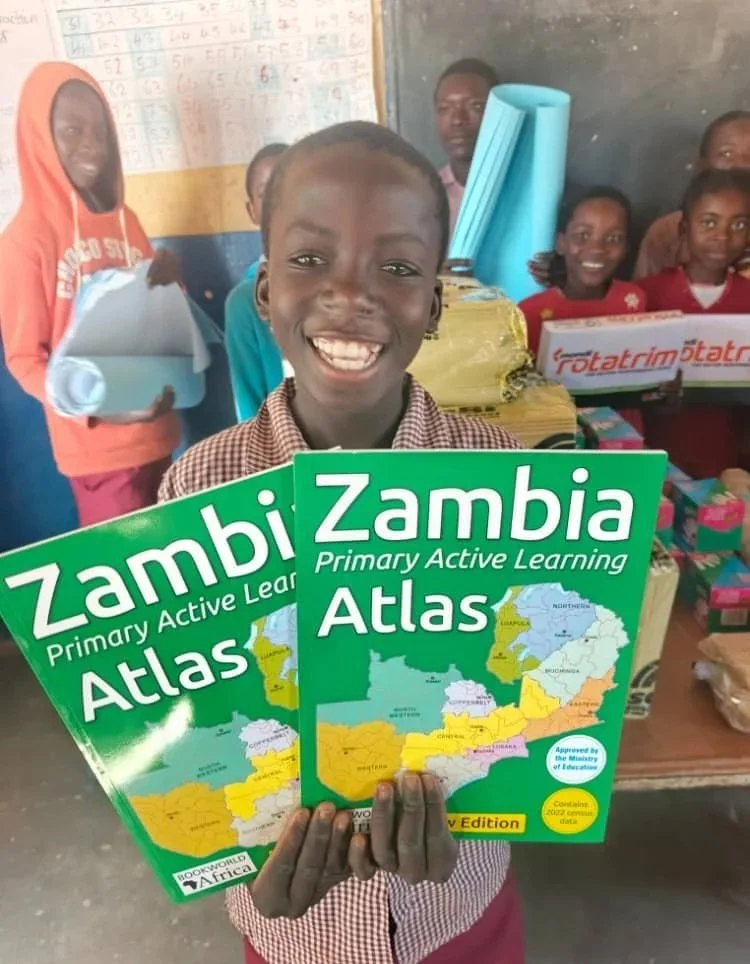
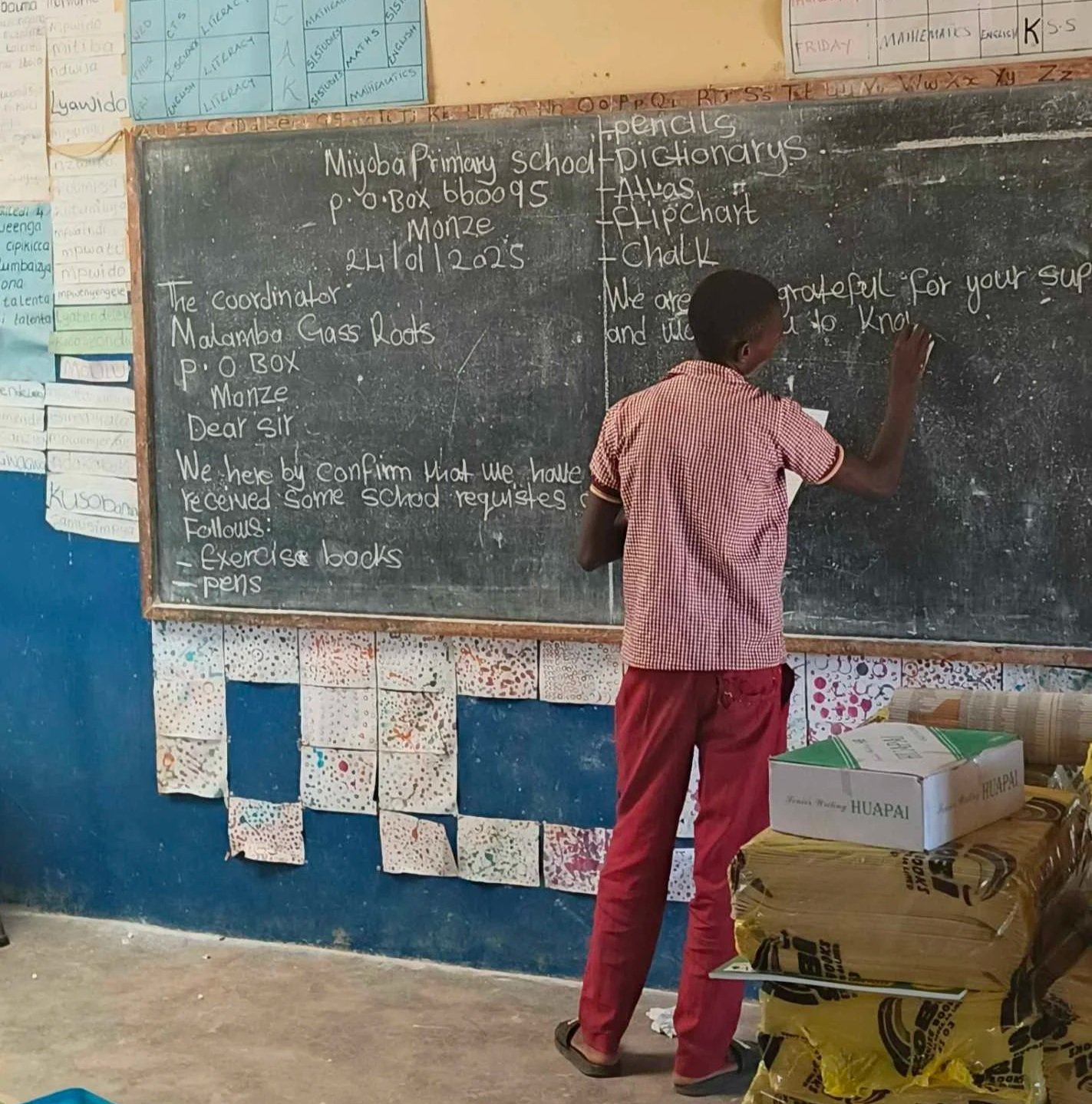
Rabson delivered school supplies to five schools in January and May. The dictionaries and atlases were a big hit!
We did it!
In February, we delivered the fourth and final load of food to the five schools that we supported throughout the devastating 2024 drought. This was a huge project for us. Every time, we'd think, "Well, that's it. How can we possibly afford to buy more once this runs out?" But thanks to Rose Charities and our generous donors, we did.
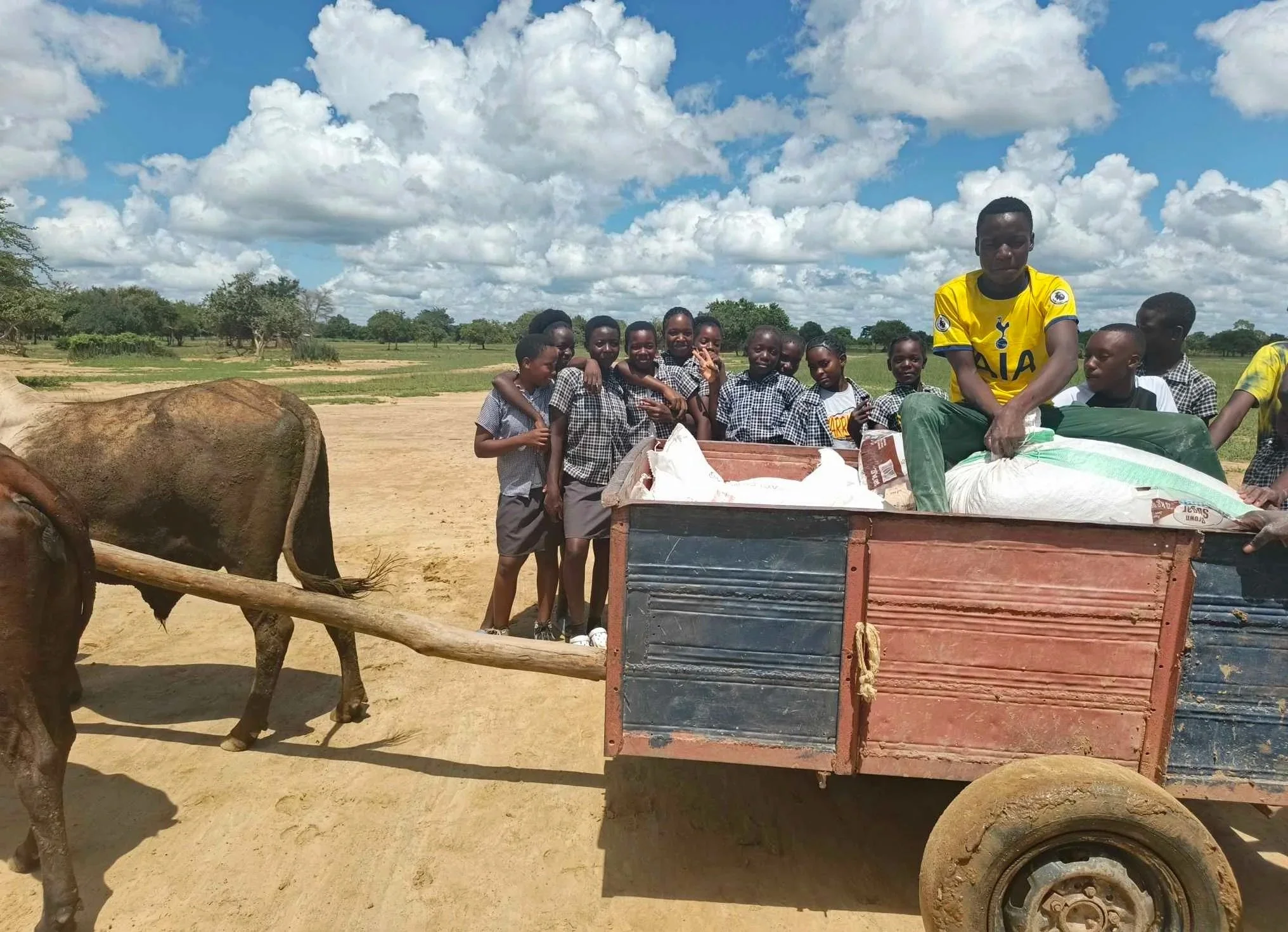
Students help to unload an ox car of food supplies. We had to choose to feed 5 of the 13 schools we support. But when we reached out to another organization who works in the area, the Friends of Monze, they stepped up to this vital support to several more schools in the area. The power of networking!
Malambo Grassroots sustained about 3,000 students throughout a devastating drought. Not only that, but combined with the school supplies that we delivered again this year in January and May, their ability to learn improved. It's hard to concentrate on an empty stomach. Teachers reported that test scores improved noticeably, as did attendance—which miraculously exceeded 100%?!?
These results prompted teachers to write to the Department of Education, asking the government to establish a permanent food program, because the impact of a feeding program was so noticeable and immediate.
You might wonder why the Zambian government doesn't fund a feeding program already, despite being pro-education. According to the UN Population Fund, 41% of Zambia's population is under 14 years old, almost 9 million children. By contrast, 15% of Canada's population is in the same age bracket (just over 6 million). Across Africa, youth (under 25) make up about 60% of the population, making Africa the youngest continent. Education is the key to unlocking the enormous potential in these innovating young people. Which is where you come in!
How many future Marie Curies or Nelson Mandelas are just waiting for a school door to open, the door of equal access to education, the door of opportunity?
As the year comes to a close, we want to thank you for all the positive impact that you have made possible this past year. The changes on the global stage remind us that we really are so interconnected, and stronger when we work together.
Please share this newsletter with anyone you know who might be interested in Africa or in our work. With heartfelt thanks,
Jocelyn, Toni, Heidi, and Rabson
If you have already donated, thank you!
If you wish to donate through Rose Charities Canada website
Or, donate through Canada Helps
(select either "Jan's Trees: The Malambo Grassroots Tree-planting Project" or "Malambo Grassroots--Zambia")
NB: If you would like your donation to go towards a specific project, please add a note in the "Additional Comments" or "Send a message" box.
P.S. The news coming out of Africa these days reveals how the continent is growing and thriving and driving change on a global level. If you're interested in reading more, here are a couple of recent articles:
"Africa Rising: The world's climate stabilizer"
"Africa's youth are rewriting the continent's economic future"